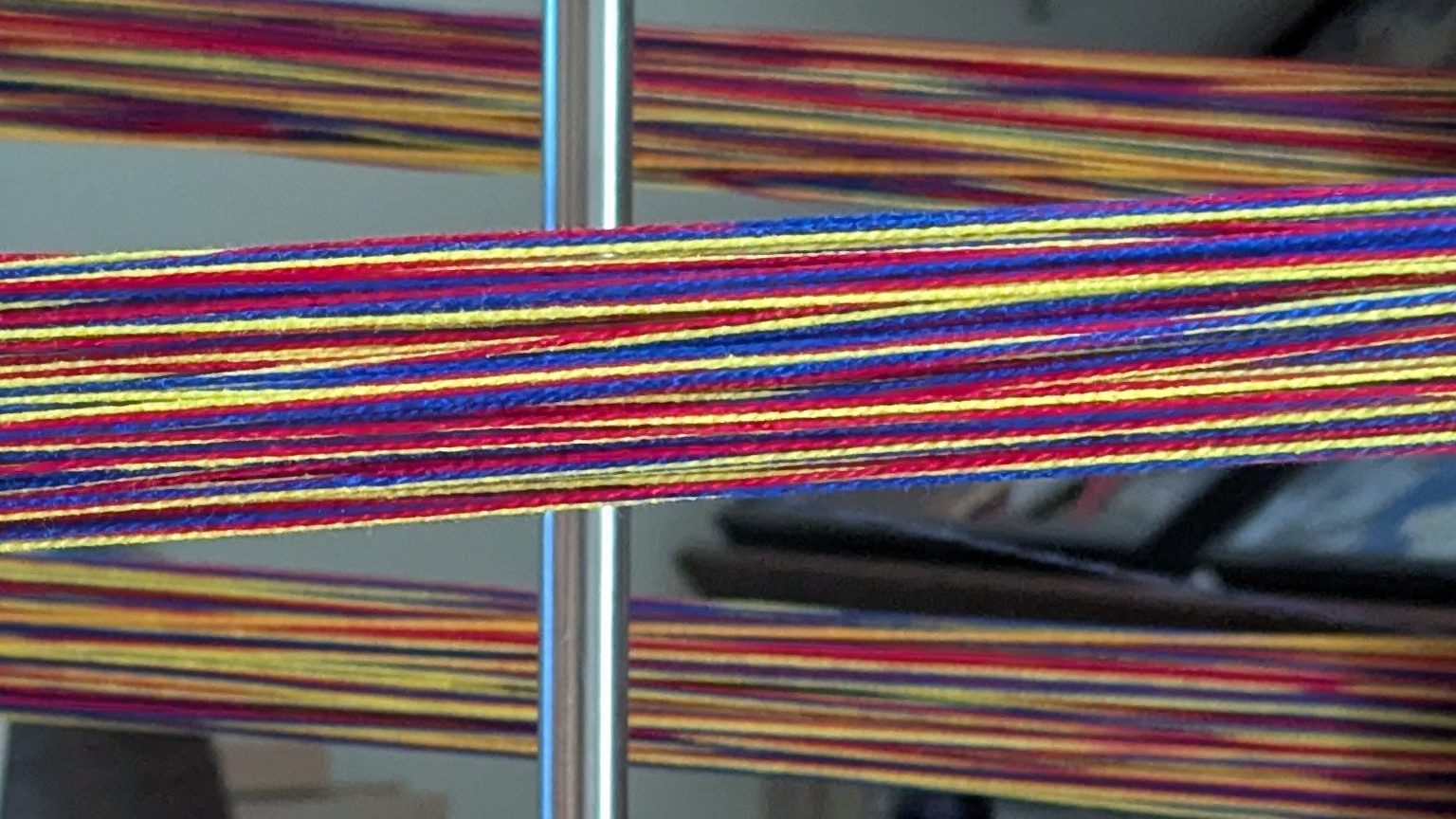
HM: Winding…

HM: Winding…
HM: Thinking about the evolution of Chinese logographs (used also in Japanese as kanji characters) from recognizably pictographic origins to modern simplified and abstracted forms as a parallel of the evolution from hand craft to contemporary technology. For example (from en.wiktionary.org), the change from an oracle bone script form

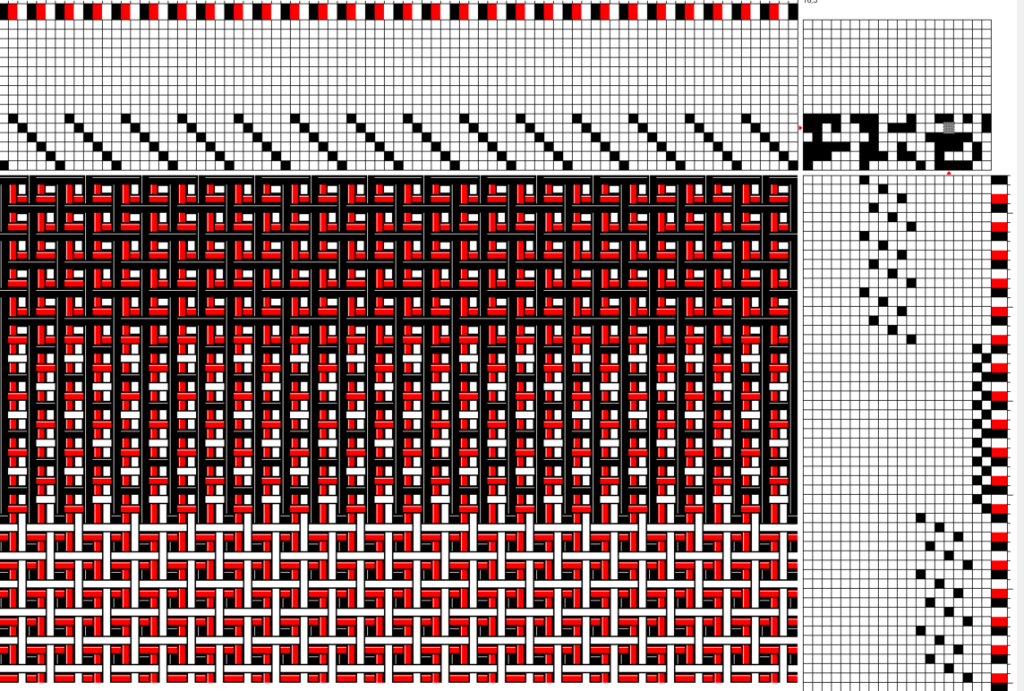
of the character used for “weaving” to the contemporary simplified form 织. Working in parallel on a digital design workflow to create drawdowns for complex multilayer weave structures to execute on our TC2 computer-sequenced Jacquard loom — starting from Meiji-era Japanese lift plans available on handweaving.net then writing Matlab code to layer them for color-cycled warp and weft…
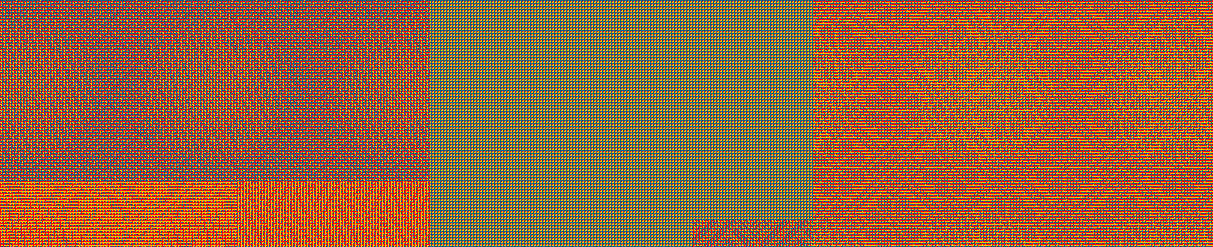
HM: thinking about multi-cloth pickup drafts that can leave blocks of warp floats on the backside, which could later (off the loom) be snipped and retied to add a “freehand” pattern layer, diagonal or even crisscross to the original warp…
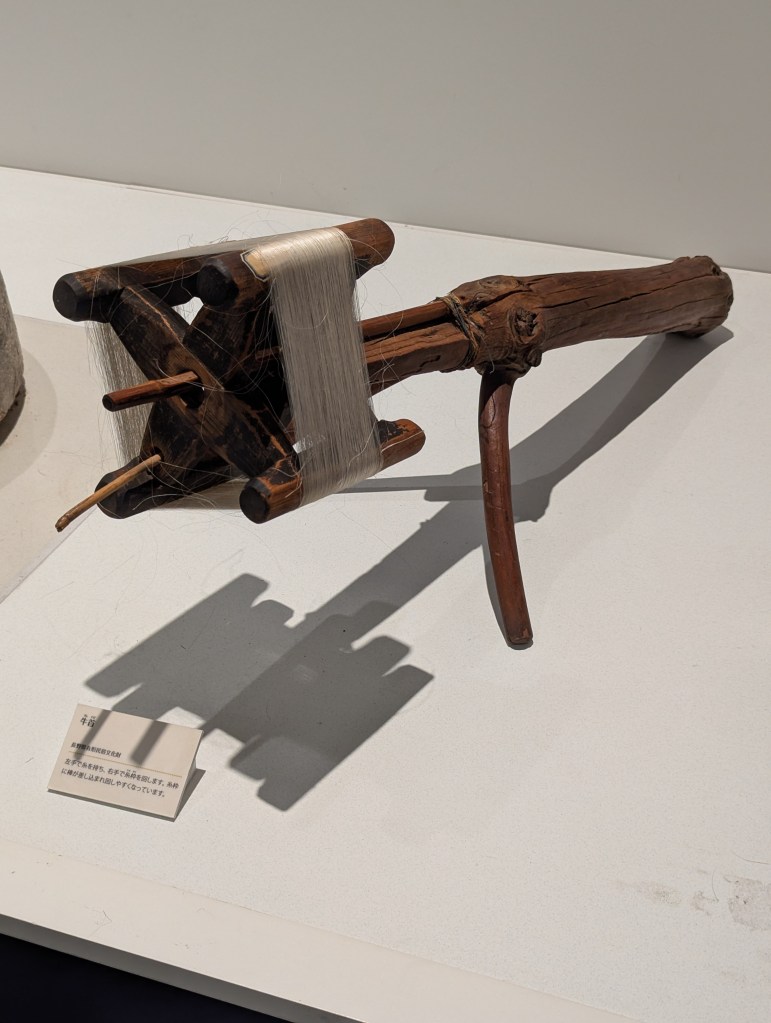
HM: Photos from Takasaki/Okaya – machinic displacement of the human hand, centuries of silk reeling…
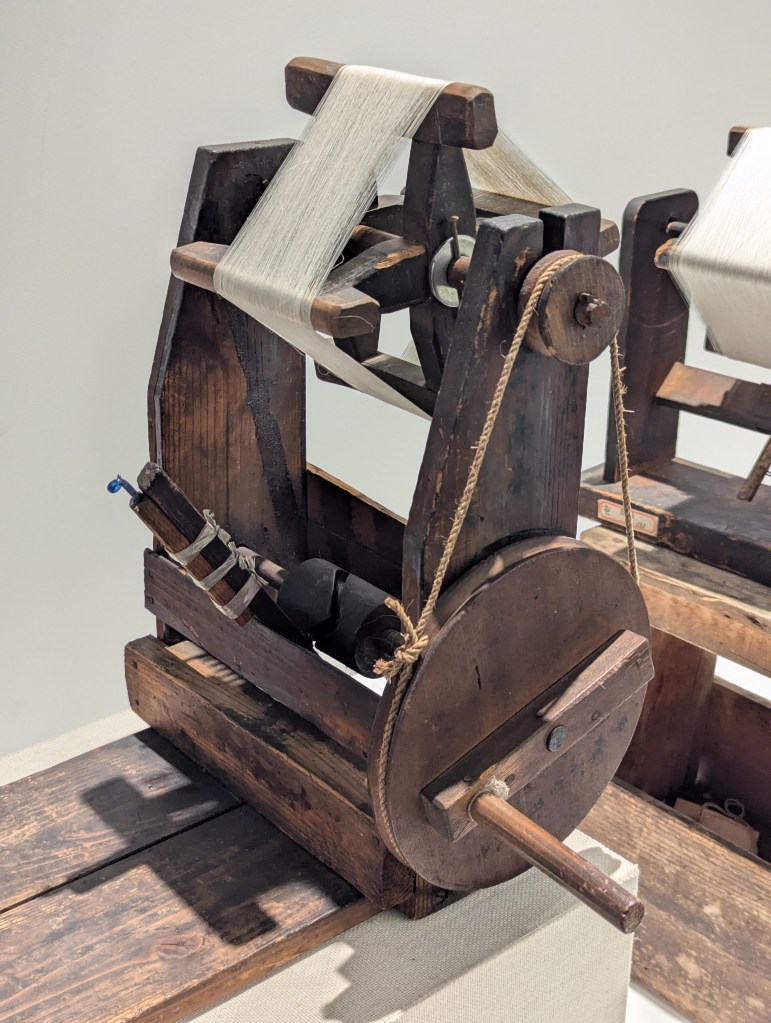

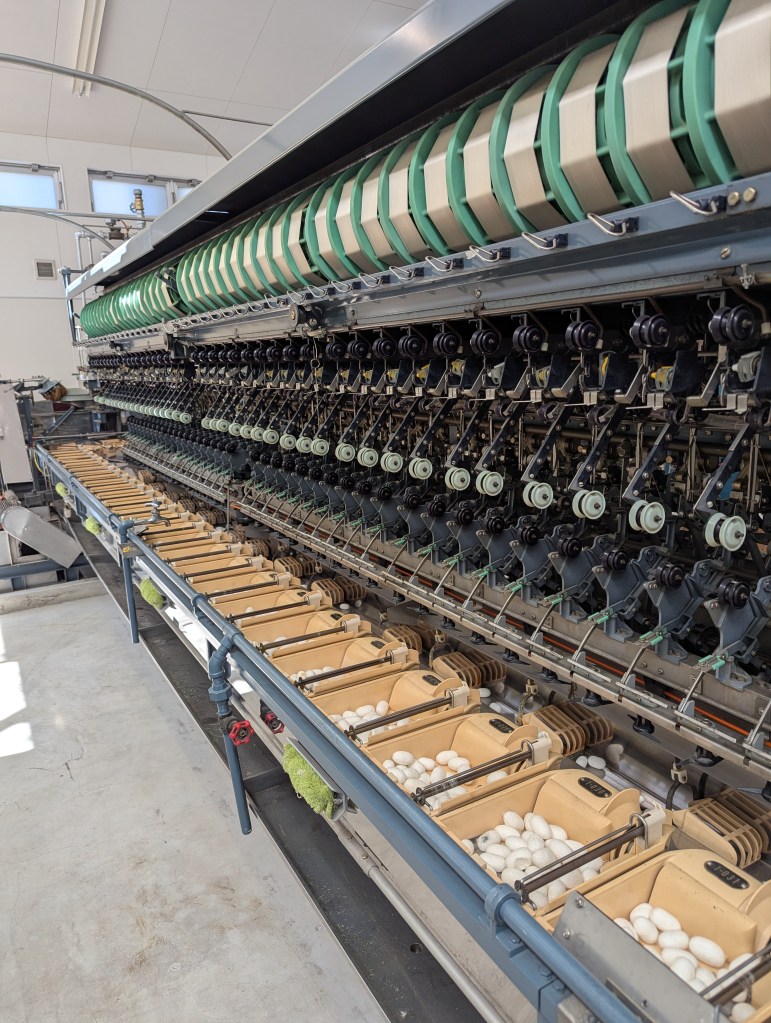
HM: on a visit to Takasaki, Japan – the Takasaki City Dye Plant Botanical Garden, a special exhibition of works by Hama Dyeing Studio: struck by the interplay of printed patterns on woven structure/substrate… (details of works by Kanji and Satoshi Hama)


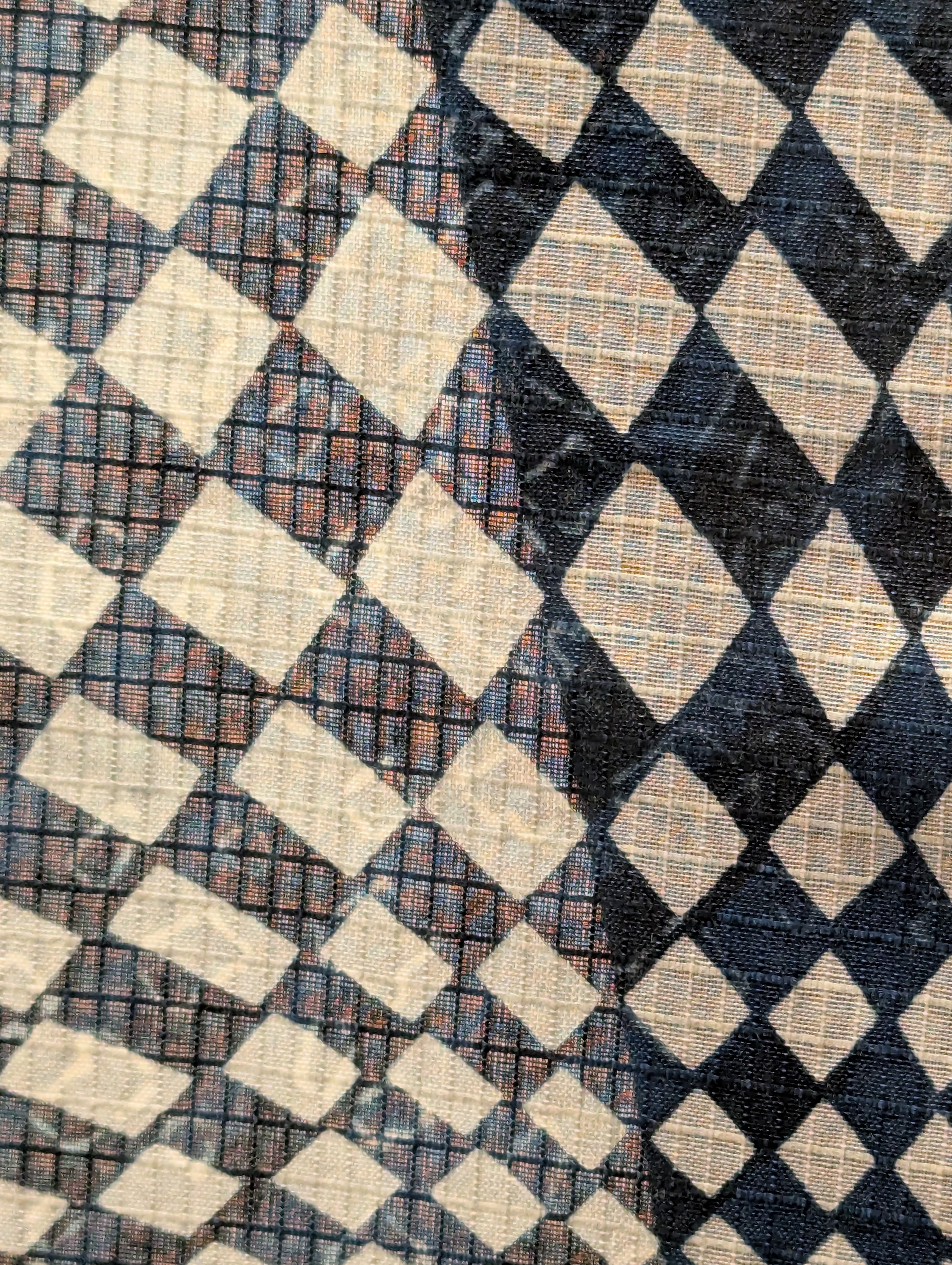

Also just marveling anew at the craft and labor required to make something like a kimono by hand, with natural materials and manual processes…
HM+CU+VC: third meeting with Vanessa – circling back to thinking about time, how the handmade embodies a certain kind of time; the time of creativity and the time of labor; what weaving drafts, punch-cards, transcripts, dance notations, etc. attend to and what they ignore; is there some way to make a thing that records the normally-invisible handwork behind the “front” surface? multi-layer cloth, thinking again about verso and backsides; a textile you can look into or walk through to access its backstory, that depth of history and how and who, the process behind the product…
CU reporting on the realignment of her press as well as venue options for showing work next summer.
HM left thinking about a kind of double-cloth with an image to “show” on the front layer and some record of process on the layer behind, with warp stitches tying them together along lines common to both patterns.
HM+CU+VC: second meeting with Vanessa – how have transitions from analog to digital served to de-center the handwork in craft, has it really gone away or just become invisible infrastructure, and how has the focus/locus of creative process shifted as a result? Tools – hand tools versus software tools, the reliability of traditional tools versus the ever-shifting innovation cycle of software tools; what is skill in the digital creative paradigm; the investment of deep preparatory time in being ready/able to quickly make great work (photography) versus the skilled-labor time of traditional slow making (painting)… In media such as weaving and printed image, how have perceptions of value/skill (in the reception of art) as well as the creative affordances perceived by makers shifted in past historical disruptions brought by technologies such as the camera and Jacquard-type looms? What has been the relative importance of digitization per se versus mechanization of processes? Have there been transitional moments in such art forms that we could try to revisit in speculative and intermedial ways?
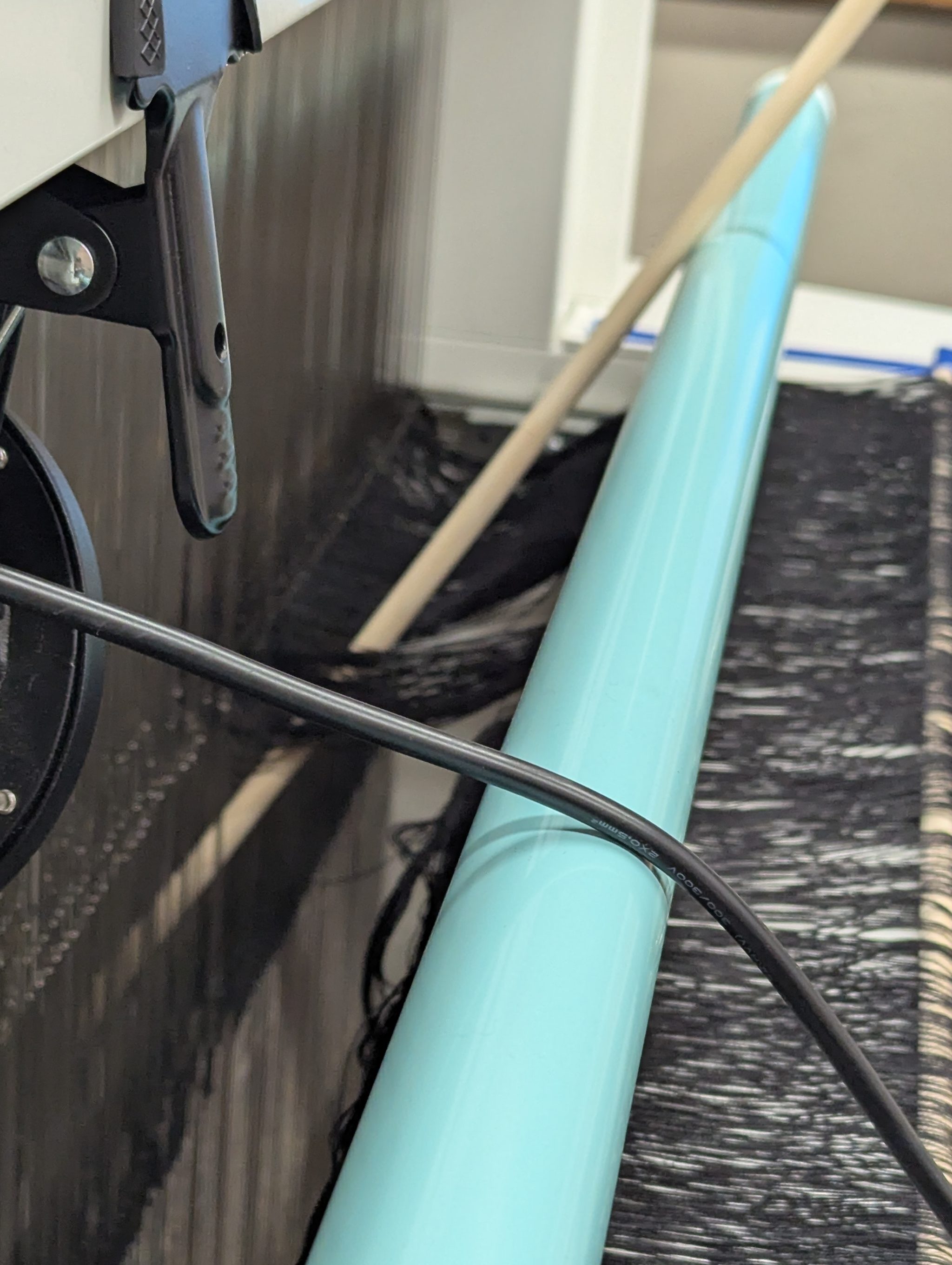
HM: rethreading our TC2 digital Jacquard loom—handwork with stick; thinking about how even (especially) in information technology the digital is just an abstraction riding atop analog physics; abstraction itself as an assertion of what we shall ignore, lumping versus splitting, willful disregard of difference for the sake of modularity, scalable design, robust design, error correction, reproducibility, repurposability… how this mechanically complex, computer-sequenced loom has actually the lowest barrier to entry for new weavers, as an experienced technician can do a general-purpose threading that enables a novice to jump on with whatever design they’ve dreamed up (with or without genAI assist) and turn it into cloth after mere minutes of instruction—here the “digital” in digital Jacquard loom serving in practice to bury the hand-and-stick work lower down the protocol stack, just maintenance in the service of making…
HM+CU+VC: first meeting with our curatorial partner, Vanessa Chang – what is the data? the discretely articulated sequence of symbols abstracted from typing versus the analog residuals of the embodied act of typing – typing versus playing a keyboard instrument (HM thinking of Nelson Goodman and the density of the analog); MoCap Tango; what does the digital add to making? VR sculpting, the affordance of freely moving within/through your sculpture; computers and higher-dimensional visualization – Tony Robbin, craft objects as three-dimensional projections of four-dimensional hyper-objects, 3D scanning and using hand-made craft objects as data; time and the diachronic happenings in a crafted space…
CU+HM: the flatness of the digital – screens are flat, even the “textures” we map onto 3d surface meshes are flat; flatness as absence of depth, the depth of time and palimpsest. in ceramics we speak of wanting deep surfaces – not flat color like a soda can but a surface you see into revealing complex materiality and extended processes of formation. digital flatness as sheer nowness, non-historicity; bits are flipped not buried. real painting is underpainting; real paintings have depth beyond topography, a depth of synthetic technique driven by the translucence of real materials. skin as testimony to craft, labor, persistence.
digital printing as the flawless materialization of pre-conceived design; analog printing as designing in/with materials. the affordances and myopia of “undo”. digital images have no verso. the backside of a brocade; ground, velatura, glazing, scumble; medium.

 thingness.digital